Search Inventory

Plumpton Hall

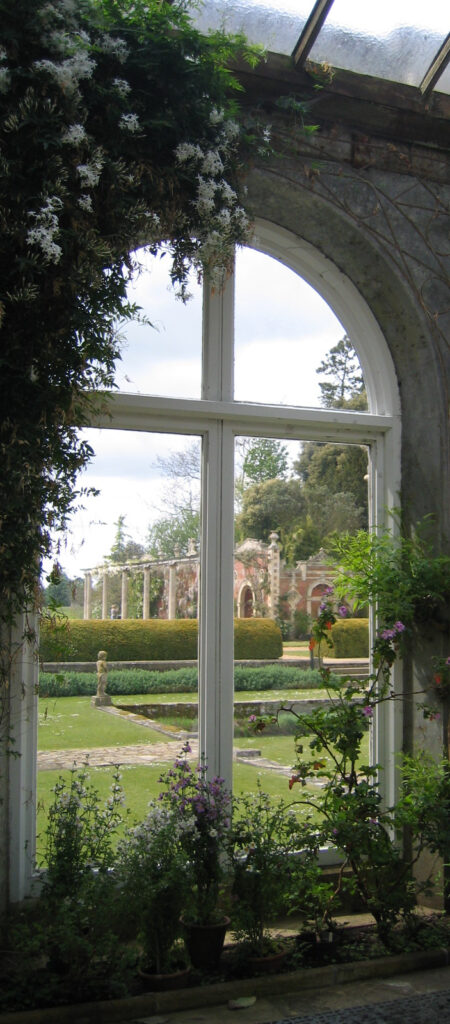
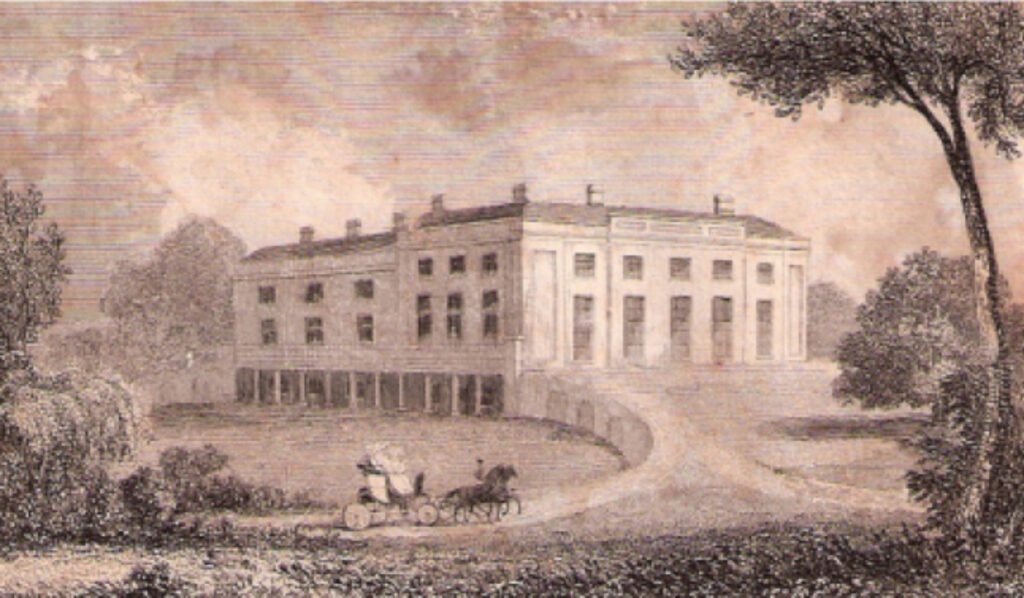
Formerly the site of a dairy and orchard owned by the Abbey of Bury St Edmunds, after the Dissolution it eventually came into the hands of the Drury family who built a timber-framed house on the site in 1537, forming the core of Plumpton Hall. In an isolated position, it became a farmhouse and was bought by Sir Francis Thomas Hammond who had the house redesigned to look like a French chateau c. 1800. The River Lark flows close to the house and had been widened to form a canal-like feature in the gardens. A small park was developed around the house that incorporated ancient woodlands with tracks radiating out from the house. It began to be known as Plumpton House during the nineteenth century and was extended in the early-twentieth century. Also on the site are surviving stables and walled garden, with one late-nineteenth century entrance lodge and another dating to c. 1911. The estate was broken up in the second half of the twentieth century, much of it turned over to arable. Some of the park was retained and the house was divided into three separate properties, each allocated a portion of the pleasure gardens. The largest central property includes the early core of the house and is named Plumpton House today. The stables and farm buildings have been converted into separately owned residential properties with some new buildings added.
Not open to the public

Plumpton Hall Read More »

Whepstead Parish

Sotterley Hall and Park

Probably incorporating an earlier mansion, eighteenth century Sotterley Hall lies beside the parish church in a circular park, created after the closure of public highways in the late-eighteenth century, although there is evidence of an earlier deer park on the site. The park incorporated areas of ancient woodland with newer shelterbelts of trees around the perimeter. Eighteenth century features include mention of a dovecot plus surviving grotto, ha-ha, dam creating a lake with summerhouse and boathouse. There are three surviving lodges, nineteenth century stables/coach houses and service wing to the rear of the house plus notable cowsheds and water tower. An eighteenth century walled kitchen garden lies south of the house within the pleasure gardens. Many ancient oaks and a number of mature nineteenth and early-twentieth century trees survive in the park today.
Not open to the public except for special events for charity

Sotterley Hall and Park Read More »

Sotterley Parish

The Old Rectory

Built as the rectory for Great Bealings c. 1844, The Old Rectory commands views of St Mary’s Church and the meadows of the Lark valley. In the 1940s, when Little Bealings Rectory in the neighbouring parish became the home of the incumbent, the Great Bealings Rectory was sold and became a private residence. Its most famous resident was Lord Belstead (d. 2005), local farmer, Lord Lieutenant of the County and Minister of State for Northern Ireland and Leader of the House of Lords under Margaret Thatcher. The house sits centrally in its pleasure grounds. The layout of lawns and meandering paths surrounded by mixed plantings of trees has changed little since the nineteenth century, albeit a new enclosed garden and terrace wrapping around two sides have been more recently been added.
Not open to the public

The Old Rectory Read More »

Great Bealings Parish

Barningham Park

Barningham Park was an estate owned by the Sheldon family before being acquired by the neighbouring Euston Estate in the eighteenth century, when it became a tenanted farm. A new farmhouse was built in the early- to mid-nineteenth century known today as Barningham Park farmhouse. A surviving eighteenth century barn lies close to the house and eighteenth century maps show an avenue of trees from the farmhouse site leading westward across a field and through the ancient woodland of Fakenham Wood, with a later avenue leading northward. Although degraded by the nineteenth century, a few trees survive from these avenues and now form part of field hedge boundaries. Barningham Park is still owned by the Euston Estate, although recently the barn has been in the process of conversion for residential use and the farmhouse for sale with surrounding land on the footprint of its early-nineteenth century gardens.
Not open to the public.

Barningham Park Read More »

Bardwell Parish

Tostock Old Rectory

Tostock Old Rectory was built c. 1800 for the Revd James Oakes rector of Tostock, whose father was the well-known Bury St Edmunds banker and diarist, James Oakes. It was set in a small landscape park with little formal planting around the house but with a large walled garden. This once gave access to an avenue of trees stretching northward through the park, although the avenue has now gone. At end of the nineteenth century it was home to a curate with a strong interest in gardening and horticulture followed by the Revd Julian Tusk, a renowned botanist and naturalist, who is documented as planning and planting a new rose garden that was probably located in the walled garden. In the mid-twentieth century it ceased to be a rectory and became a farmhouse and more recently a private residence. The layout of the grounds has changed little since the mid-nineteenth century, although shelterbelts of trees have become more dense since that time.
Not open to the public

Tostock Old Rectory Read More »

Tostock Parish

Tostock House

With an earlier core, Tostock House was renovated and extended in the early-nineteenth century to create a substantial farmhouse with impressive farm buildings. By the mid-nineteenth century it was home to the Revd William Tuck, who later became rector of Tostock. He developed a small park from surrounding fields and converted a natural pond into an ornamental feature with an island and boathouse. During the latter part of the twentieth century and into the twenty-first century part of the parkland was lost to a substantial new property and most of the farm buildings converted for residential purposes.
Not open to the public

Tostock House Read More »

Tostock Parish

Redisham Hall

Standing in a landscape park newly-created in the early-nineteenth century, Redisham Hall was built in the 1820s for John Garden Esq. close to the site of the demolished Little Redisham Hall, the sixteenth century manor house for the lost village of Little Redisham that was incorporated into Ringsfield parish during the early-seventeenth century. The site of the lost settlement and fragmentary remains of its church are within the present park, its perimeter incorporating ancient woodland and early-nineteenth century shelterbelts of trees. The park contains a number of mature parkland trees with a late-nineteenth/early-twentieth century avenue and entrance lodge. There is an ornamental bridge over a tributary of the Hundred River leading to the house site, where outbuildings and a partly-walled kitchen garden appear to have eighteenth century elements and are probably related to enclosures associated with the original Elizabethan house. A ha-ha separates the pleasure gardens from the parkland and encloses lawns, herbaceous borders, shrubberies and ponds. A small plant nursery is situated in part of the walled garden.
Plant nursery and gardens open to the public on specific days during the summer

Redisham Hall Read More »

Ringsfield Parish

Witnesham Hall

A former manor house, sixteenth century Witnesham Hall stands close to the parish church beside the River Fynn, which flows through the site. The house was extensively remodelled c. 1841, possibly with advice from Perry Nursey of Little Bealings, proponent of the picturesque style who may also have advised on the design of the gardens and small parkland surrounding the house. It became a farmhouse in the mid-nineteenth century. Today it is a private residence and includes surviving eighteenth century screening walls, gate piers and a coach house.
Not open to the public

Witnesham Hall Read More »

Witnesham Parish

Assington Hall

Destroyed by fire in 1957, elements of sixteenth century Assingham Hall stands beside the parish church within the remains of an eighteenth century landscape park that once included an avenue of trees with entrance lodges, dammed stream and moated island that may date to the Tudor period. The estate was sold and broken up in 1938. In separate ownership, the northern half of the park is arable, where there is a mature avenue of lime trees and newly-created pond. The southern part has survived much as it was in the mid-nineteenth century, including many mature specimen trees. The moated island has gone, although the nineteenth century pleasure garden layout survives. The stables and coach house have been converted to a residential property, now in separate ownership, with remains of the kitchen garden walls around its garden. A new house has been built within the orchard. To the south of the park a mid-nineteenth century model farm has been converted for residential use.
Not open to the general public. Run as a Christian Centre only for bookings and events

Assington Hall Read More »

Assington Parish

Blackheath House

Once part of the Friston Hall Estate, Blackheath House lies on the north bank of the River Alde and is surrounded by woodland, creeks and heath. It was sold in the early-nineteenth century to create the Black Heath Estate. An earlier house on the site was replaced in c. 1887 by an elaborate brick mansion, which was re-fronted in the middle of the twentieth century and later internally gutted by the owners, award-wining architects Michael and Patty Hopkins. Once used as a shooting lodge, the house is set in an oval-shaped plantation with a series of drives created before 1839. On the estate are the surviving remnants of a large duck decoy and decoy lodge dating back to at least the early-eighteenth century and an early-nineteenth century keeper’s cottage nestling in the plantation.
Not open to the public

Blackheath House Read More »

Friston Parish