Search Inventory

North Cove Hall

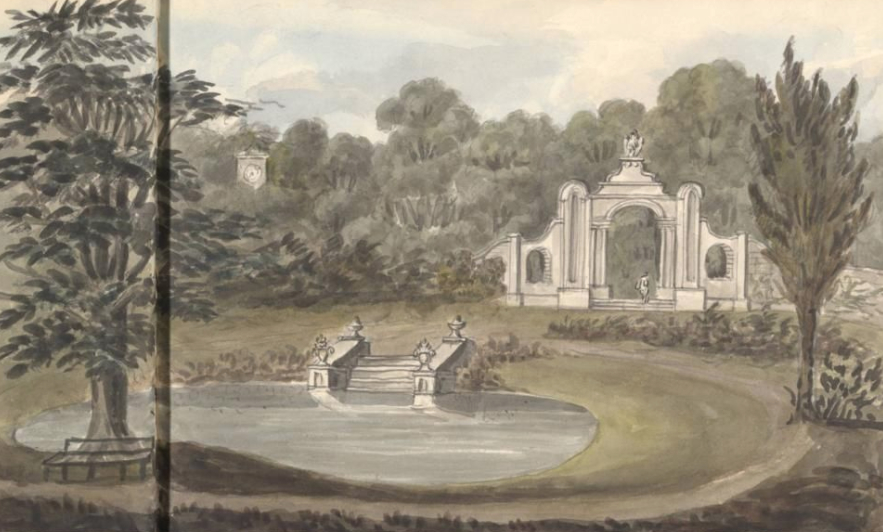
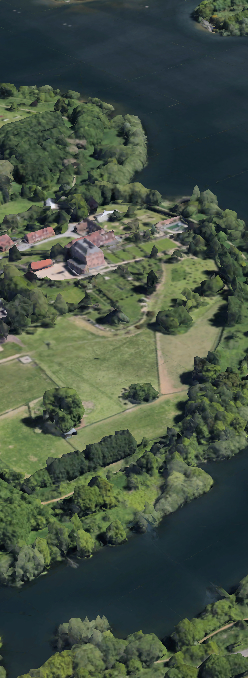
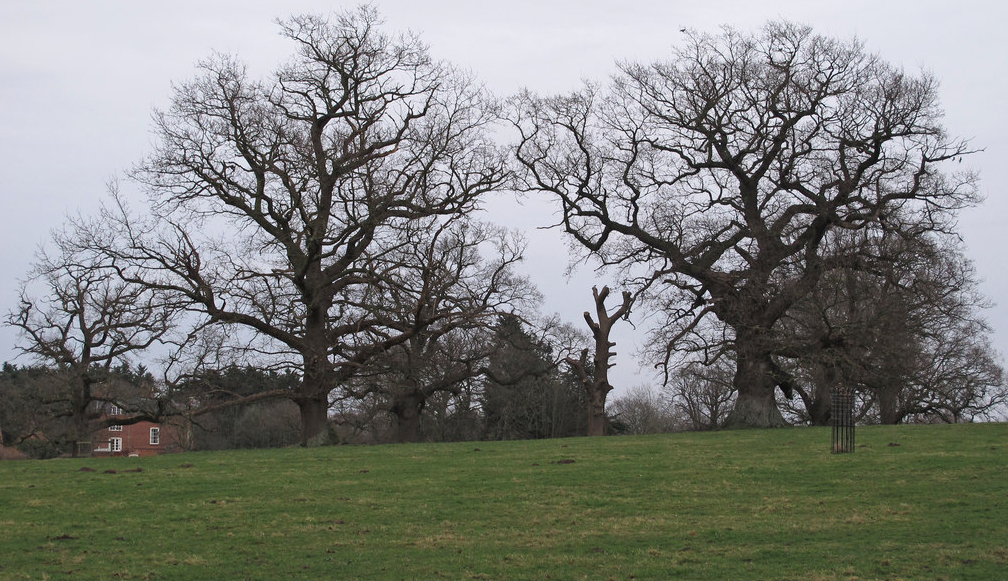
South of the Waveney River, eighteenth century North Cove Hall sits on the site of an earlier house within a small early-nineteenth century park that expanded to take in ancient woodland and North Cove Green. The park expanded further when a bypass road was built in the twentieth century. Much of the park survives and mature trees are dotted throughout. Bounded by a ha-ha, surviving pleasure gardens were established with a further ha-ha to the front of the house. Within the gardens are the remains of a walled garden with oval pond straddling the south wall.
Not open to the public

North Cove Hall Read More »

North Cove Parish

Huntingfield Hall

Developed as a model farmhouse in the late-eighteenth century by Sir Joshua Vanneck, owner of nearby Heveningham Hall, Huntingfield Hall was built on the site of a manor house that was surrounded by a medieval deer park. During the sixteenth century the old Hall was a fortified complex with courtyards and gatehouse. It is alleged that Queen Elizabeth I stayed at Huntingfield to enjoy the hunting in the park and the surviving Queen’s Oak is said to have been used as a vantage point by the Queen, although it may have been Mary Tudor, sister of Henry VIII, who was married to the 1st Duke of Suffolk. Designed to look like a castle, possibly to designs by James Wyatt, the farmhouse acted as a folly that could be seen from Heveningham Hall and the park was incorporated into Heveningham parkland. The farmhouse appears not to have had any formal pleasure gardens.
Not open to the public

Huntingfield Hall Read More »

Huntingfield Parish

The Depperhaugh

Built on the site of a farmhouse, The Depperhaugh is a mid-nineteenth century country house once set within a small park created from surrounding fields with walled garden and small area of formal garden. At the beginning of the twentieth century The Depperhaugh Estate was broken-up, the house lost its southern parkland and became a school and the grounds further reduced when sold in 1969 to become a care home, as it remains today. Some mature field boundary and freestanding trees survive from the nineteenth century, as does a square walled garden and the remains of the formal gardens in the form of a raised terrace and arbour.
A nursing home only open to the public on specific days

The Depperhaugh Read More »

Hoxne Parish

Hemingstone Hall

The early-seventeenth century Hemingstone Hall was once surrounded by a series of geometric gardens, shown on a surviving 1749 estate map. These included an avenue on the central axis of the house that was lost during the nineteenth century but has now been re-established. West of the house is a surviving walled garden dated to the early-eighteenth century, although some earlier elements can also be seen. By the nineteenth century the formal gardens to the front of the house had been swept away to be replaced with a park-like area with open views towards the house. An eighteenth century barn and stables lie to the north-west. The house and gardens were extensively restored and extended during the second half of the twentieth century to include a tall yew hedge along the boundary with the lane, the walled garden, topiary yews, parterres, woodland garden and herbaceous borders.
Not open to the public except on days for charity

Hemingstone Hall Read More »

Hemingstone Parish

Theberton Hall

Replacing an earlier manor house that was recorded as having a deer park in the sixteenth century, Theberton Hall was built at the end of the eighteenth century at the centre of a newly-created landscape park. At the time the house was surrounded by an oval-shaped garden enclosure. Major alterations and extensions in the Italian Renaissance style were made to the house in the mid-nineteenth century, including the creation of an elaborate stable courtyard with an ornate well head and addition of an ornamental tower. After World War II the estate was broken up and the house partly-demolished leaving just the original house wing and part of the stable courtyard standing in a much-reduced parkland devoid of trees. Since then it has been rescued from further destruction, the house restored, the remains of the courtyard incorporated into the gardens and new trees planted in the remaining parkland.
Not open to the public

Theberton Hall Read More »

Theberton Parish

New House Farm

The home of the Golding family, there was a reference to a ‘Newhouse’ in the sixteenth century, although the present house dates to the seventeenth century and had major alterations and additions in the eighteenth century. The site sits in a small park and includes a surviving eighteenth century canal-like pond and once had a walkway, summerhouse and small formal garden that have been lost. It became a farmhouse in the nineteenth century when a new ‘model’ farm courtyard was created opposite the house, now mostly lost save remnants of low enclosure walls.
Not open to the public

New House Farm Read More »

Poslingford Parish

Polstead Hall

Polstead Hall and the nearby parish church lie in a former medieval deer park that was disparked during World War II. With earlier origins, the house was rebuilt in the late-eighteenth century and altered in the early-nineteenth century. A number of veteran trees survived into the 1970s, including the ‘Gospel Oak’, once said to be the oldest oak in Suffolk but now only a dead trunk. During the nineteenth century there were L-shaped pleasure gardens, part at a lower level than the parkland beyond to form a secluded hollow. There are the remains of a stable yard, separated from the gardens by a surviving wall and sheds, once with a central glasshouse accessed from both gardens and stable yard that has since been lost. Today much of the parkland has been turned to arable and the house has lost its southern wing and part of the garden, now a park-like lawn. The lower-level garden has a swimming pool enclosure and area of formal planting to a geometric plan. Isolated from the Hall, a surviving lodge stands at what was once the southern entrance.
Not open to the public

Polstead Hall Read More »

Polstead Parish

Rise Hall

The site of an ancient manor house close to the parish church, the present Rise Hall was built in 1826 as a farmhouse at the heart of an established farming estate. The site includes landscape features probably associated with a previous house, such as moat, fishpond and mound surrounded by a ditch. An early-nineteenth century small park was established and at the end of the nineteenth century it became the site of the newly-created Eastern Counties Dairy Institute, which soon moved to Gippeswyk Park in Ipswich. It has been continuously farmed since, although the house and farmyard are now separated from the farming operation.
Not open to the public

Rise Hall Read More »

Akenham Parish

Exning House

A former early-eighteenth century country house, now converted to a luxury gated residential complex, designed by Andrew Jelfe. Much of its early-nineteenth century park survives. The house was altered and extended in 1886 to designs by the Arts and Crafts architect Philip Webb. Dating from the mid-eighteenth century two wrought iron gateways, section of walling attached to the house and southern garden gateway survive. Of a similar period are the south-western entrance, western boundary wall plus stables and coach house, now residential. A model farm was built on the Exning House Estate in the nineteenth century.
Not open to the public

Exning House Read More »

Exning Parish

Rushford Hall

Formerly called The Lodge or Rushford Lodge, Rushford Hall is believed to be a former manor house lying just south of the county boundary between Norfolk and Suffolk. Before boundary changes at the end of the nineteenth century the house was in Norfolk but is now in Euston parish in Suffolk. It is believed to have been enlarged and altered in the early-eighteenth century to create a substantial country house. It was the home of Thomas Crookenden in the late-eighteenth and early-nineteenth century. His wealth came from sugar plantations, which financed the development of its parkland and construction of a surviving overgrown walled garden. After 1842 it became a tenanted farmhouse, then at the end of the nineteenth century the house site was used to house polo ponies for the next eight decades. In the 1970s it became the base for a farming estate. During these latter periods few changes were made to the gardens and parkland around the house.
Not open to the public

Rushford Hall Read More »

Euston Parish