Search Inventory

Sternfield House

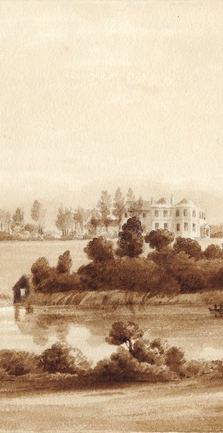
Formerly the rectory, Sternfield House was built in the second half of the eighteenth century beside Sternfield’s parish church, probably for the Revd Montague North who was rector between 1767 and 1779. It had a small park of woods and pastureland and an in-and-out drive. Pleasure gardens lay mainly to the south of the house with a small walled garden beside the churchyard accessed by staff through a walkway hidden from view of the house and gardens by a high brick wall. Attached to this wall is a surviving nineteenth century hexagonal summerhouse. Unclear if executed, plans for the gardens for the Revd North included an ornamental garden canal bordering the walled garden. However, by 1838 this was absent from the site. Little change took place to the grounds and house until it ceased to be the rectory and became a private residence in 1938. In the 1960s Sir Eric and Lady Prue Penn made alterations to the house and developed the grounds so they were fit for royal visitors, including the Queen. Today the walled garden, staff corridor and basic park and basic garden layout remain much as they were at the beginning of the nineteenth century, although the parkland is now more wooded and the southern gardens developed and formally planted.
Not open to the public

Sternfield House Read More »

Sternfield Parish

Denston Hall

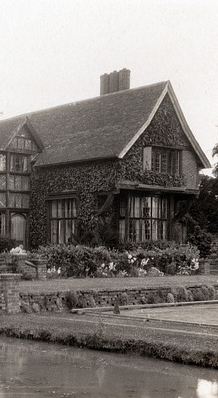
Once the site of a moated Tudor mansion, Denston Hall is a late-seventeenth/early eighteenth century house set in a park dating back to at least the eighteenth century. One wing of the Tudor mansion and arm of the moat survive at the rear of the Hall. Probably a replanting of an earlier avenue, trees line the entrance drive today. South of the Hall is a lozenge-shaped walled garden with three surrounding canals thought to be early-eighteenth century. On the site there is a sixteenth century barn and attached dovecote and also decorative park gates. The park has changed little since the nineteenth century, although additional planting and replanting of shelterbelts and woods has taken place and a large lake was created east of the Hall in the early-twenty-first century. The walled garden and surrounding pleasure gardens continue to be well cared for and in the early-twenty-first century parts were partly-redesigned by Mark Rumary and later Xa Tollemache.
Not open to the public

Denston Hall Read More »

Denston Parish

Reydon Hall

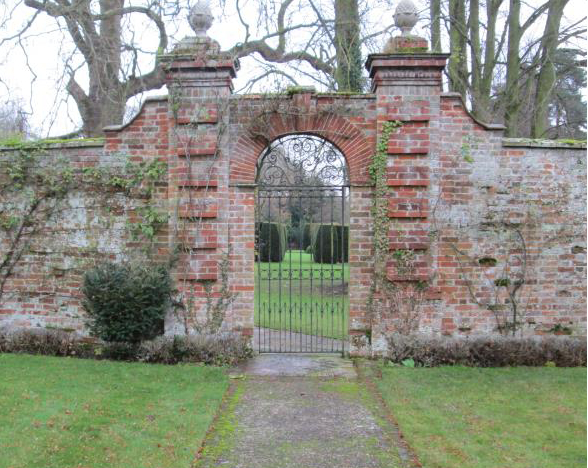
Believed to date to the late-seventeenth century, Reydon Hall once stood in an extensive estate owned by the Ewen family. During the first half of the nineteenth century it was the family home of Agnes Strickland, a well-known author and poet, although by then much of the estate had been sold off. At this time it had a small area of parkland and lawned gardens dotted with trees. The house was extended during the second half of the nineteenth century. The site includes an eighteenth century stable block and nineteenth century wall, once part of the kitchen garden enclosure, with twentieth and twenty-first century hedged garden enclosures around the house, although part of the parkland is now in separate ownership and the site of a residential property.
Not open to the public

Reydon Hall Read More »

Reydon Parish

The Grove

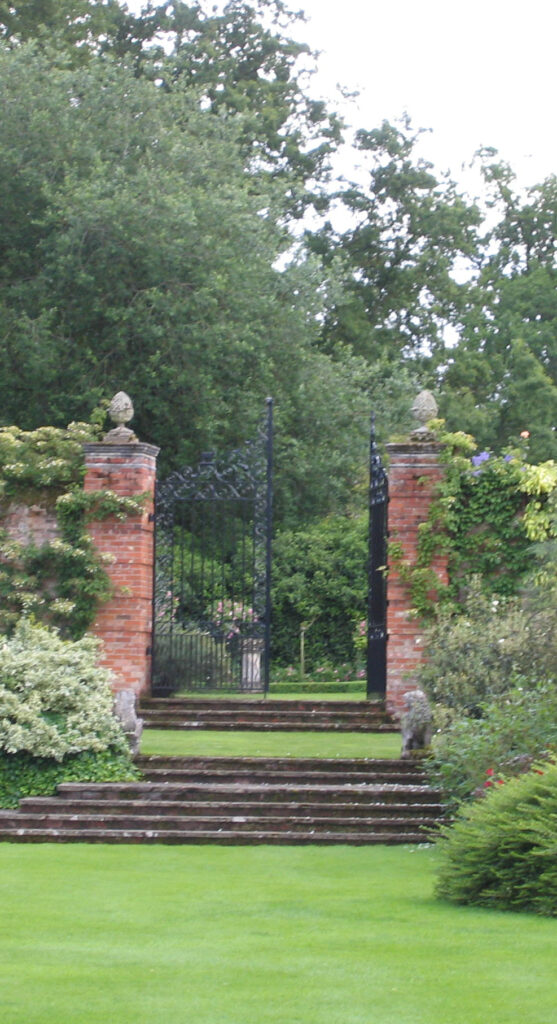
The Grove was home to clergymen during the nineteenth century, although they were not always rector of the parish. The Revd James Carlos was responsible for major alterations and additions to the house in the early-nineteenth century and is believed to have developed the small parkland area, pleasure and walled garden at the same time. Paths led into a small wood to the north where there once stood a summerhouse, possibly a grotto. The east wall of the walled garden was at a lower height and topped by iron railings, thus allowing views out into the gardens and parkland beyond. There has been little change to the garden’s layout and it remains very much as it was when home to the Revd Carlos. A nineteenth century lodge is now in separate ownership.
Not open to the public

The Grove Read More »

Frostenden Parish

Ilketshall Hall

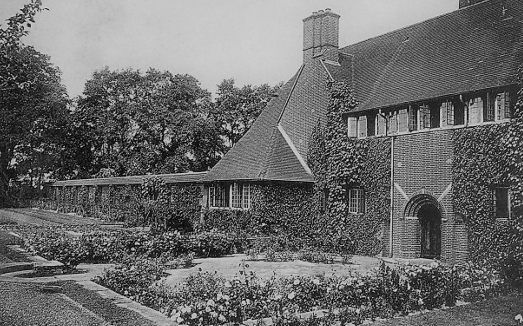
Originally part of the site of Grove Farm in the neighbouring parish of Ilketshall St Andrew, Ilketshall Hall is an Arts and Crafts house built in a mock-Tudor style c. 1903 by the Adair family of nearby Flixton Hall and believed to have been used as a hunting lodge for the Flixton Estate. Beside the remains of a square moat, Grove Farmhouse lies east of the Hall and the farm buildings were situated just over the parish boundary in Ilketshall St Lawrence. The new house was built beside these. At about the same time a square walled garden, since lost to large poultry sheds, and plantation were established to the north-west of the Hall.
Not open to the public

Ilketshall Hall Read More »

Ilketshall St Lawrence Parish

Finborough Hall

Now an independent school, late-eighteenth century Finborough Hall replaced a previous house overlooking an extensive wooded landscape park with post-medieval origins. A hospital during World War I, later the headquarters of Eastern Electricity, in the 1960s the parkland was sold for a golf course and the house and gardens become a school in the 1970s. Probably of eighteenth century date, an ornamental lake and folly mound topped by a column survive. Many original drives have become footpaths across the golf course. Three entrance lodges survive, two as private houses, with the remains of ornamental metal gates and brick piers still marking one of the old entrances. The third dates to the late-nineteenth century and is the main entrance to the school where the drive and adjacent early ha-ha curve around the pleasure gardens towards the north front of the house. Some evidence remains of features from a nineteenth century garden that included an ‘embowered walk’ leading to a shrubbery with paths and ornamental arch to an oval pond. The mid-eighteenth century coach house and stables are now residential properties. Probably of a similar date, a large irregularly-shaped walled garden now has twentieth century houses within its walls that were breached for entrances and a road, although many walls were preserved and restored to survive today.
Not open to the general public

Finborough Hall Read More »

Great Finborough Parish

Groton Place

With sixteenth or seventeenth century origins, Groton Place was created the manor house for Groton by John Winstrop before he emigrated to Massachusetts during the puritan migration in 1630. It was remodelled in the Georgian style during the eighteenth century and later became a farmhouse. The site included farm buildings, now converted to residential properties, a surviving trapezoid-shaped walled garden attached to the north wing of the house that in 1838 may have become an ornamental garden, with an attached kitchen garden and path leading to a large pond, both surviving today. An orchard and small area of parkland to the east have been lost to arable cultivation.
Not open to the public

Groton Place Read More »

Groton Parish

Wetheringsett Manor

Wetheringsett Manor was built c. 1844 as a new rectory to designs by Samual Sanders Teulon in the Gothic Revival style on agricultural land north of the parish church. It became a private residence in 1863. The house was surrounded by a small park with a large partly-walled kitchen garden and small area of pleasure gardens. During the twentieth century the extent of the parkland was reduced and it became the headquarters of a Christian missionary organisation and in the twenty-first century a school for children with special educational needs. Today a number of institutional buildings stand close to the house, twentieth century houses have been built in the original western parkland where a mature avenue of limes lines the entrance drive, although the nineteenth century pleasure gardens and kitchen garden survive.
Not open to the general public

Wetheringsett Manor Read More »

Wetheringsett cum Brockford

Wenham Place

A farmhouse since at least the nineteenth century, early-sixteenth century Welham Place is thought to be the remains of a much larger mansion that was enlarged again in the nineteenth century. It is believed to have been owned by Willy Lott, whose cottage at Flatford was made famous in the painting by John Constable, but was tenanted at the time. Attached to the rear of the house is a sixteenth century walled garden with bee boles in one wall and a nineteenth century gabled summerhouse. During the twentieth century most of the earlier farm buildings were replaced.
Not open to the public

Wenham Place Read More »

Wenham Magna

Tattingstone Place

The mid-eighteenth century Tattingstone Place once stood in an extensive landscape park created around a series of fishponds in the valley of Tattingstone Brook, which may have been part of an elaborate eighteenth century water garden. Its gardens were enclosed by a ha-ha. The house stood on rising ground with a terraced garden, possibly the work of William Nesfield in the mid-nineteenth century to accommodate the slope down to the water’s edge. In the nineteenth century a yard attached to the house became a surviving walled garden. Within the wooded parkland there was an icehouse within a clump of trees and the eighteenth-century Tattingstone Wonder folly was built just outside the park’s boundary as an eye-catcher and to extend the view from the house. During the 1970s and 80s a dam was constructed that flooded the valley of the brook to create Alton Water and a substantial part of the designed landscape associated with the house was lost.
Not open to the public

Tattingstone Place Read More »

Tattingstone Parish