Search Inventory

Grundisburgh Hall

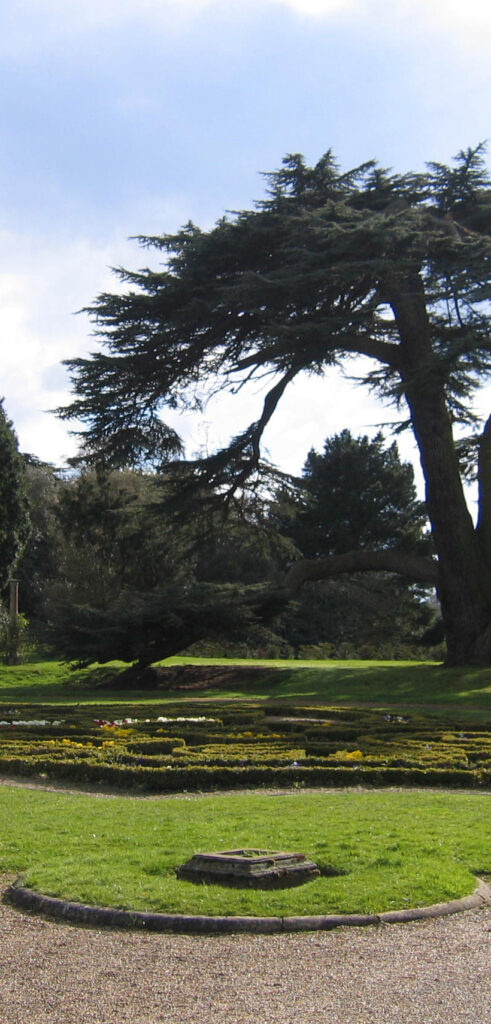
Standing in a small late-eighteenth/early-nineteenth century park, the present Grundisburgh Hall dates back to the early-seventeenth century on the site of an earlier house, but was altered and reduced in size in the twentieth century. The park has remained substantially intact and veteran and mature trees are dotted around the parkland and in thin tree belts. Water meadows to the south-east of the house were converted into a lake during the twentieth century. The site includes a former seventeenth century stable block, pleasure grounds and walled garden that probably dates back to the seventeenth century.
Not open to the public

Grundisburgh Hall Read More »

Grundisburgh Parish

Tostock Place

An early-nineteenth century house retaining part of an earlier mansion, Tostock Place sits in a small nineteenth century park, also with earlier origins. The site contains a listed walled kitchen garden with crinkle-crankle walls on all sides. Part of the house was demolished in the twentieth century and the remainder now split into three properties, although that named Tostock Place retains the parkland. The coach house with the walled garden and former fives court have been converted for residential purposes and are in separate ownership.
Not open to the public

Tostock Place Read More »

Tostock Parish

Broxtead House

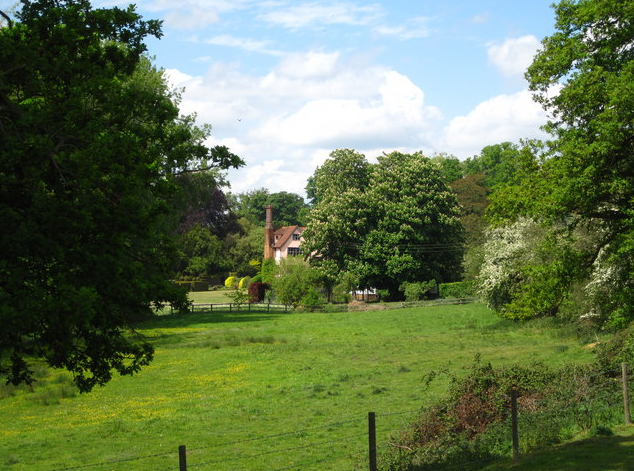
A small country house built at the beginning of the nineteenth century, Broxtead House was intended to be at the heart of a farming estate created by improving its poor sandy soils using progressive agricultural techniques. Due to falling prices and debts, it was sold and became part of the large Rendelsham Hall Estate to be used for sporting purposes. Sold in the early-twentieth century, the house is now rented out and half of the land is cultivated with the rest developed for recreational purposes. Remnants of heathland are being preserved and extended.
Not open to the public

Broxtead House Read More »

Sutton Parish

Woolverstone House

Woolverstone House is an Arts and Crafts house completed in 1901 and sunken garden to designs by Sir Edwin Lutyens, the gardens possibly inspired by the work of Gertrude Jekyll. Built on land on the edge of Woolverstone Park and owned by Charles Hugh Berners, it was originally used as a rest home for nuns and orphan girls, served as a Red Cross hospital during World War I, became a school and then a private residence in the 1980s. Attached to either side of the house are tall walls with arched gateways. The gardens comprise a series of compartments or rooms and include a sunken garden, lawns, formal hedges, herbaceous borders and numerous species of trees.
Not open to the public

Woolverstone House Read More »

Woolverstone Parish

Wells Hall

Originally the site of the moated manor house for Milden, Wells Hall had become a farmhouse by the eighteenth century with a smaller house replacing the earlier and grander Hall. The site straddles the parish boundary of Brent Eleigh and Milden. Most of the surviving moat and the Hall are in Milden with a sixteenth century brick boundary wall and gateway in Brent Eleigh. The site also includes a dry fishpond and large barn that probably dates back to the earlier Hall, both in Milden parish. Wells Hall is now a private residence.
Not open to the public

Wells Hall Read More »

Brent Eleigh Parish Milden Parish

Bosmere Hall

First built in the second half of the eighteenth century on the north side of the River Gipping valley, Bosmere Hall was surrounded by a small park including the ancient Bosmere lake, known for its abundant fish where two boathouses once lay on its shore. The house sat in an oval garden enclosure with stables and enclosures to the north, one of which had glasshouses during the nineteenth century. A further glasshouse, probably an orangery, had views across the parkland and down to the river. A small lodge, probably dated to the early-nineteenth century, survives at the entrance along the park’s boundary. The house has been substantially altered since it was first built but the parkland, lake and garden enclosure around the house survive today very much as they were in the nineteenth century, although the glasshouses have been lost and the stables and enclosures have been converted for office use.
Not open to the public

Bosmere Hall Read More »

Creeting St Mary Parish

Spexhall Manor

Thought to have been the site of a manor house but becoming a farmhouse, Spexhall Manor has a sixteenth or seventeenth century core that was extensively restored and enlarged by the architect Walter Sarel in the Arts and Crafts style c. 1908 to create a sizable country house. Having worked with and been influenced by Gertrude Jekyll, he is likely to have also designed the gardens that developed at the time using Italianate features such as terraces, buildings and bridges. A run of crinkle-crankle walling of unknown date shields these gardens from the drive and appears to be post-1928. During the twentieth and early twenty-first century a small park developed around the house.
Not open to the public

Spexhall Manor Read More »

Spexhall Parish

Kedington Hall

Once the moated site of an ancient manor house owned by the Barnardiston family who entertained Elizabeth I in 1578, Kedington Hall stood next to the parish church and was remodelled in the early-seventeenth century but demolished c. 1785. Its dry moat survived into the late-twentieth century but was filled to become part of an arable field. The walls of its kitchen garden mostly survive, although it is now the site of a churchyard extension and two residential gardens. The route of an ancient entrance avenue leading to the Hall from the village survives, although replanted, and is now part of the Stour Valley Path.
Not open to the public

Kedington Hall Read More »

Kedington Parish

Chediston Hall

Now the site of a twentieth century farmhouse at the heart of a farming estate, the original Tudor Chediston Hall was the subject of major rebuilding phases in the eighteenth and nineteenth centuries and stood in a small landscape park, which could have had its origins in either century. Characteristic of an eighteenth century ornamental garden feature, a rectangular canal stood north of the house until it was infilled in the twentieth century. Some walls survive from a walled kitchen garden near the house as does a ha-ha marking the northern edge of the gardens, both likely to be contemporary with the park’s creation. Another ha-ha south of the house also survives, although the parkland has been given over to arable.
Not open to the public

Chediston Hall Read More »

Chediston Parish

Gipping Hall

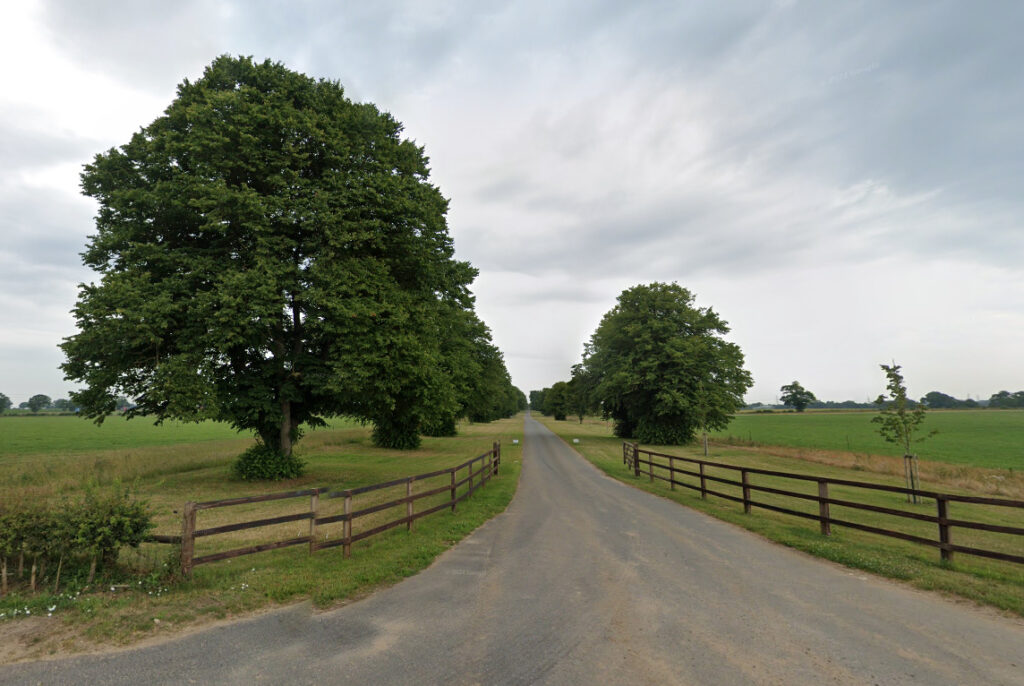
The Gipping Hall Estate was owned by the Tyrell family from at least the fifteenth century until Gipping Hall was demolished c. 1860. The site lies at the end of a long, narrow green that would once have acted as a wide, formal entrance drive culminating in a view of their surviving high-status and elaborate private chapel built c. 1483 that stood close to the mansion. Opposite the chapel is Chapel Farm, once the home farm for the estate, and beyond to the west is a surviving early-eighteenth century octagonal dovecote. By 1846 the surrounding park had reduced in size from when it was the Tyrell family’s main residence. Two walled kitchen gardens were situated north of the mansion but slowly deteriorated after its demolition, leaving only humps and bumps in a field turned over to grazing to act as a ghost of their existence.
Not open to the public

Gipping Hall Read More »

Gipping Parish