Search Inventory

Wortham Manor

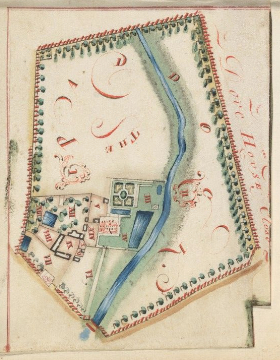
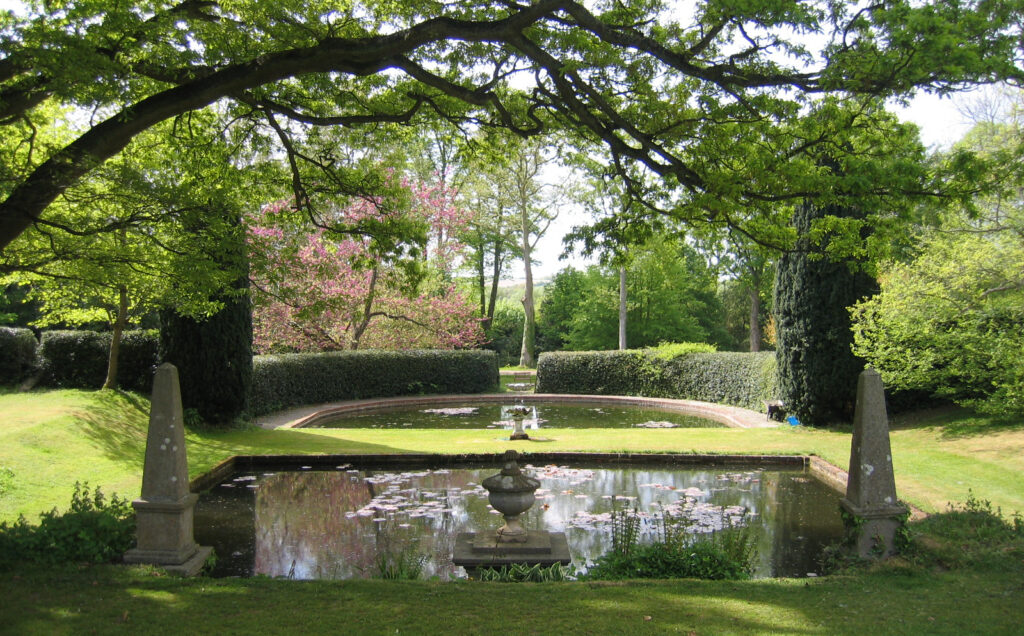
Close to the River Waveney, the border between Suffolk and Norfolk, Wortham Manor is a timber-framed building dating to the mid-seventeenth century but with earlier origins when it was the manor house called Wortham Hall. It was altered over the centuries but maintains its Queen Ann south-facing frontage. It has an area of parkland, once with a wide avenue of trees, and formal pleasure garden that has developed since the seventeenth century. The site included a large barn in a meadow, kitchen garden and dovecot. The latter was lost in the twentieth century and the barn converted to residential with the old kitchen garden now a tennis court in separate ownership. Plantations with some trees dating to at least the early-nineteenth century survive.
Not open to the public

Wortham Manor Read More »

Wortham Parish

Downham Hall

In north-west Suffolk on the south side of the Little Ouze River – the border of Suffolk and Norfolk – Downham Hall once lay in an eighteenth century landscape park but was demolished in 1925. Due to the sandy free-draining soils, the area once had extensive heathland used for sheep grazing and rabbit warrens. The Hall, which was either a remodelling or replacement for an earlier house, had medieval origins and was part of a church and manor house grouping. The estate was mainly known for its hunting and shooting. In the late-eighteenth century it had two main drives with entrance lodges that were flanked by avenues of trees and a number of new plantations were planted. It is possible Lancelot ‘Capability’ Brown advised on the new landscape park design. Remnants of a ha-ha separating the gardens from the park from this period survive. The estate was bought by the Forestry Commission and the house demolished to make way for their regional headquarters and the parkland was absorbed into a new afforestation scheme and is today within Thetford Forest. The house site and gardens are now covered in private housing, although an icehouse and remnants of the walled kitchen garden survive.
Thetford Forest open to the public

Downham Hall Read More »

Santon Downham Parish

The Rookery

Once known as Battlesea Hall, The Rookery was home to the Catholic Fox family until 1778 when it was sold to the Henniker-Major family of Thornham Magna to became a farmhouse, as it continues to be today. The house dates back to the seventeenth century and the site includes a surviving ornamental garden canal complex constructed by the Fox family, probably during the eighteenth century. The complex includes Suffolk’s largest ornamental garden canal.
Not open to the public

The Rookery Read More »

Stradbroke Parish

Claydon Old Rectory

The former rectory of Claydon lies beside the Church of St Peter, which was made redundant in 1977 and now in the care of the Churches Conservation Trust. The rectory became a private residence by 1955 and is best known for its resident incumbent during the second half of the nineteenth century, the Revd George Drury, who was noted for his Anglo-Catholic sentiment and antagonising many of the local population. This culminated in the ‘Akenham Burial Case’ of 1878, the neighbouring parish that was also under George’s care. George built a surviving eccentric walled garden with towers that was said to be a Biblical allegory. Close by was an underground grotto. It is unclear how much of the wider rectory gardens were developed by George, with a gatehouse, the grotto and two viewing mounds probably of a date before his time. In the second half of the twentieth century the old rectory, gardens and walled garden became an office headquarters where a number of nineteenth century trees survive around the gardens, including a fine Cedar of Lebanon.
Not open to the public

Claydon Old Rectory Read More »

Claydon Parish

Theberton House

Previously known as Mount House, Prospect House and Brick House, Thomas Whiting Wootton enlarged the original house c. 1834 when it was renamed Theberton House. It passed through the family to the Milner-Gibsons who owned it into the early-twenty-first century. The present family bought Theberton House in the 1960s. Its small landscape park was probably created when the house was enlarged. An existing lane appears to have been closed as it crossed the parkland, although by 1905 it had become a public road. The remains of an eighteenth century mount with views of Leiston Abbey survives, as do a number of nineteenth century decorative wrought iron entrance gates. A stable block and walled garden with barrel-shaped roofed glasshouse and round, thatched apple store lie to the north of the house.
Not open to the public

Theberton House Read More »

Theberton Parish

Cavenham Hall

A house named Cavenham Hall existed when Cavenham Park was created in the late-eighteenth century. It stood close to the village towards the northern boundary of the parkland with stables and walled garden nearby. The house was demolished at the end of the nineteenth century and a new hall was built more centrally in the park to designs by Andrew Noble Prentice, known for his Arts and Crafts buildings. He also designed a new stable block and coach house on the site of the old house and two entrance lodges. A formal garden with lawns, paths, flowerbeds and pedestals to the rear of the new house are also believed to have been by Prentice. Henry Ernest Milner designed a number of features in the gardens, including a hedged rose garden, rock garden and fernery. It is likely that Pulhamite, the artificial stone, was used for various pedestals, ornaments and rockwork. Cavenham Hall was demolished in 1947 and most of the gardens were lost. Much of the parkland survives, as do the stables and coach house, having been converted to residential properties.
Not open to the public

Cavenham Hall Read More »

Cavenham Parish

Brightwell Hall

On the site of an earlier manor house, Brightwell Hall was built in 1663 by Sir Samuel Barnardistan whose father was Sir Samuel Barnardiston of Kedington, a prominent Suffolk Puritan. Sir Samuel created a grand H-shaped mansion that is depicted in an engraving by Kip and Knyff dated 1707 surrounded by extensive formal gardens typical of the Restoration period, although it is unclear if it was an idealised depiction. It shows numerous enclosures containing parterres, lawns and orchards. Water features included a large pond linked to an ornamental canal with terraced walkway overlooked by a banqueting house and a smaller canal with summerhouse. Entry to the mansion was via a grand avenue. The house was demolished c. 1760 and remaining farm buildings became a farmhouse, also named Brightwell Hall. The estate was broken-up and sold in 1945. The house site has been redeveloped into a residential property with new formal gardens and a lake as depicted on the 1707 engraving. Linear earthworks remain that are likely to relate to avenues and walkways attached to the seventeenth century house.
Not open to the public

Brightwell Hall Read More »

Brightwell Parish

Bramford Hall

On the site of an earlier house, mid-eighteenth century Bramford Hall was built by the Acton family of Livermere Hall and stood within a small landscape park, probably of a similar date. It passed through the female line to the Middleton, Broke and Lampton Lorraine families. The house and park were requisitioned during World War II and the house was demolished in 1956 and most of the estate broken up and sold in 1972. A small part of the house survived the demolition and is now incorporated into a modern residence within an irregularly-shaped wooded garden enclosure surrounded by fields. The site includes a large square walled garden, probably contemporary with the eighteenth century house. A round entrance lodge of a similar date has not survived.
Not open to the public

Bramford Hall Read More »

Bramford Parish

Wherstead Park

In 1784 Sir Robert Harland commissioned Jeffry Wyatville, the architect and garden designer best known for his work at Chatsworth and Winsor Castle, to substantially extend an existing house to form the Wherstead Park mansion. On the site were surviving stable block and large walled garden with a water tower, thought to have been designed at the same time. Five years later Humphry Repton, the renowned garden designer, produced one of his famous Red Books with suggestions for the site’s gardens and medium-sized landscape park. Standing on a hill overlooking the River Orwell and the town of Ipswich, using ‘picturesque’ design principles Repton’s suggestions included taking full advantage of these views from the mansion. How many of Repton’s suggestions were implemented is not known. However, opening-up the view down to the river and the development of at least two woods or coverts within the park, including one surrounding an icehouse, seem likely to have been influenced by his work. By the nineteenth century there were three entrances with lodges. After being requisitioned in both world wars, Eastern Electricity bought the site as its headquarters and added new office buildings beside the original mansion, with much of the estate sold. In 1982 the construction of the A14 leading to the Orwell Bridge cut through the northern parkland leaving just a tiny slice of woodland to the north of the house, which became a car park. By the time the East of England Co-operative Society bought the site in 2008 there remained a small area of garden near the mansion but all the parkland had been sold for agricultural use.
Not open to the general public except for business users

Wherstead Park Read More »

Wherstead Parish

Carlton Hall and Park

Eighteenth century Carlton Hall once stood in a landscape park but was destroyed by fire on Christmas Day 1941 when requisitioned by the government for the war effort. It stood near the site of an earlier hall that may have been associated with a lost settlement centred on the surviving parish church. The Carlton Hall Estate expanded during the eighteenth century. The house, pleasure gardens, walled garden and well-wooded parkland were leased out for much of the nineteenth and the first half of the twentieth centuries, including to Richard Garrett III and his family. Richard had built up the family engineering business based in Leiston, his factory is now The Long Shop Museum. After World War II the estate was broken up. An industrial estate and houses were built on part of the parkland and eventually the Carlton Hall site was redeveloped to create a number of residential properties who share what remains of the gardens and a small area of parkland. A sports club owns part of the original parkland and the rest has been converted for arable use.
Not open to the public

Carlton Hall and Park Read More »

Kelsale cum Carlton Parish