Search Inventory

Boxted Hall

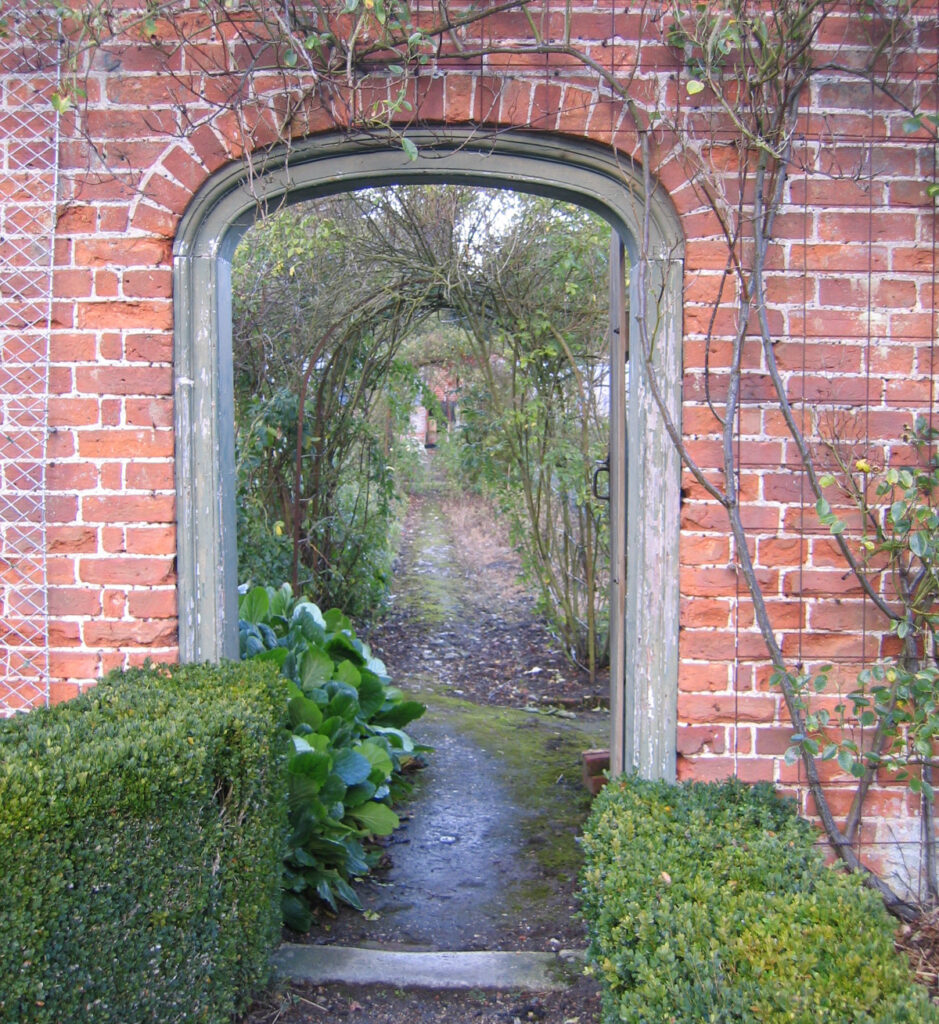
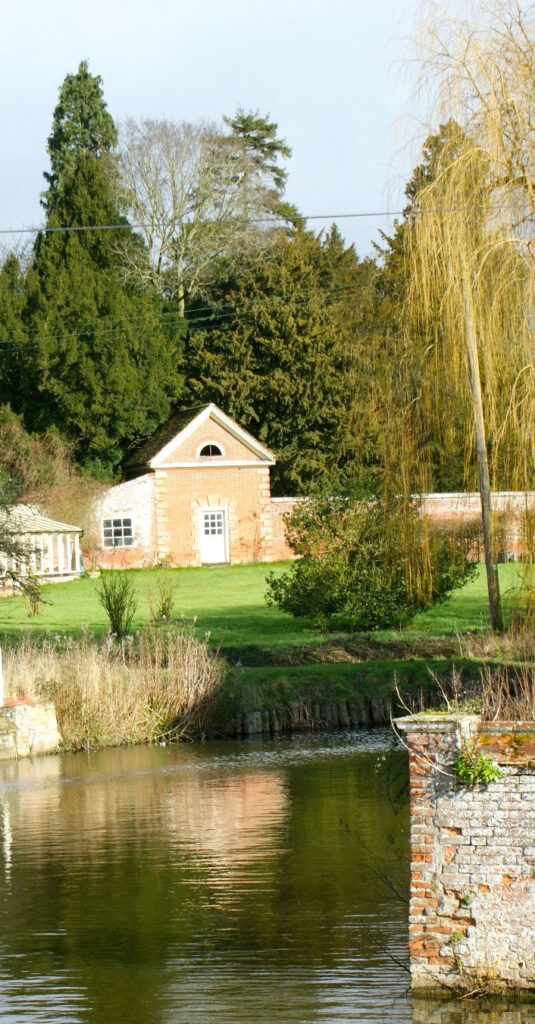
Owned by the Poley/Weller-Poley family since the fourteenth century, the present moated Boxted Hall was built in the sixteenth century to replace an earlier house on the site that had a medieval deerpark. The house is accessed via a medieval bridge across the moat fed by the River Glem. Probably with mid-eighteenth century origins, a landscape park was developed around the house with a surviving partly-walled garden and two pavilions on the opposite side of the river within its pleasure gardens. Other walled enclosures, probably of a similar date, are on rising ground north of the moat. The river fed a series of channels that are suggestive of wildfowl management and documented in the nineteenth century as ponds with water lilies, reed beds and willows. Other features included shrubberies, a fern garden and stumpery with a number of mature ornamental trees. There was also a dovecote, ice house and surviving entrance lodge.
Not open to the public except to hire for house parties, weddings and events.

Boxted Hall Read More »

Boxted Parish

Poslingford House

(also known as Shadow Bush and Poslingford Park)
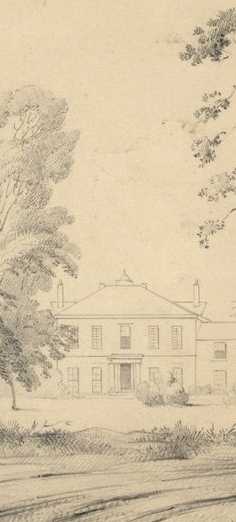
Named after the ancient woodland nearby, the Shadowbush Estate was originally owned by the Golding family. Through marriage it passed to Colonel Thomas Weston who built the present neoclassical house c. 1820 with pleasure grounds and surrounding park with two entrances and lodges. The walled garden was attached to a coach house to the north. In 1844 it was sold into the Severne family, changed ownership twice during the twentieth century and again in 2016/7. Today there is little change in the extent and character of the gardens and parkland, although the lodge to the southern drive is now in ruins. The walled garden and attached coach house were converted to residential in the 2010s, using the northern drive for access.
Not open to the public

Poslingford House Read More »

Poslingford Parish

Rushbrooke Hall

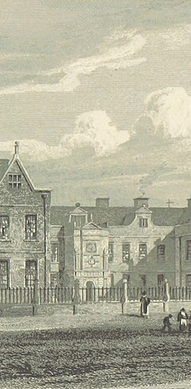
Demolished in 1961, sixteenth century Rushbrooke Hall once occupied a moated site within a landscape park that is known to have been in existence in 1703, but probably had much earlier origins. The mansion was altered in the early-eighteenth century to the fashionable Georgian style, although maintaining its basic U-shaped plan. The moat survives within the gardens of a new house that was built attached to the walled garden during the twentieth century. Now substantially reduced in size and turned to arable, the park expanded and contracted over time and once had a number of vistas and drives, some of which survive as tracks and paths, although its entrance lodges have gone. It also included a surviving remote early-eighteenth century canal but a smaller canal just west of the mansion was in-filled during the nineteenth century. The irregularly-shaped pleasure garden enclosure included a surviving walled garden with attached stables, orchard, belts of trees and shrubs and a raised terrace and walkway. In the first half of the twentieth century many of the estate village homes were rebuilt in mock-Tudor and Modernist styles.
Not open to the public

Rushbrooke Hall Read More »

Rushbrooke with Rougham Parish

Livermere Hall and Park

Demolished in 1923, Livermere Hall was built in the early-eighteenth century to replace the earlier Broom Hall on another site within a new landscape park in both Great and Little Livermere parishes. Existing meres were enlarged and linked to form lakes, with plantations developed. The village of Little Livermere was moved out of the park leaving just the parish church, now in ruins, and a seventeenth century farm within it. At the same time William Kent designed the southern parkland, kitchen garden and pleasure grounds on the moated site of the demolished Broom Hall close to the village of Great Livermere. Later alterations to the mansion have been attributed to the architect Samual Wyatt and in 1791 Humphrey Repton produced a Red Book with his recommendations for alterations and additions within the park, many of which were implemented. In 1815 Lewis Kennedy, a London nurseryman known for his picturesque designs, was consulted on further alterations to the park and pleasure gardens surrounding Livermere Hall. At the beginning of the twentieth century Livermere Hall and Park were sold to the owner of Ampton Hall and soon after the mansion was demolished. After World War II the parkland became arable fields leaving just the lakes, plantations, a sweeping through-drive with surviving lodges at both ends, a much diminished kitchen garden and a rough area of shrubland where the mansion and its pleasure gardens once stood.
Not open to the public except on public footpaths that cross the site near to the lakes and mansion site.

Livermere Hall and Park Read More »

Great Livermere Parish Little Livermere Parish

Ousden Hall

Beside the church, Ousden Hall was demolished in 1955, the site now in the gardens of Ousden House, a remodelling of the old stables. Originally built for the Moseley family in the sixteenth century, the moated house was enlarged and remodelled in the mid-eighteenth century. The Moseley’s house stood in a park with a possible sixteenth century surviving viewing mound in woodland south of the site. Avenues extended out from the park but had gone by 1816 when the parkland expanded to become a landscape park. William Emes, the landscape designer, may have had a hand in the park’s layout. An eighteenth century dovecote and nineteenth century cottage ornée style entrance lodge survive, although its drive has gone. One arm of the moat survives that became a canal around the middle of the eighteenth century including an embankment with walkway flanked by a yew hedge. A mid-nineteenth century clock tower from the old house survives. An eighteenth century walled garden lies beside the church, now in separate ownership and mainly laid to grass. Since the 1970s the pleasure grounds of Ousden House have developed into a series of garden rooms with the clock tower a focal point for a crinkle-crankle yew alley, herbaceous borders designed by Arabella Lennox Boyd, a moat garden, woodland and ornamental lake.
Not open to the public

Ousden Hall Read More »

Ousden Parish

Bredfield House

With earlier origins and later eighteenth century alterations and additions, much of Bredfield House was demolished in 1950 leaving only the rear service wing that was enlarged to create Fitzgerald Cottage, a separate garden house that became the present Bredfield House and stable block, also converted to a residential property. Two original walled gardens are now the outside space for the latter two properties. Separated from the small surviving park by a ha-ha, the site includes remains of an eighteenth century garden including ornamental canal with walkway and mount. During the early part of the nineteenth century it was home to Edward Fitzgerald who went on to find fame as the translator of the ‘Rubaiyat of Omar Khayyam’.
Not open to the public

Bredfield House Read More »

Bredfield Parish

Heveningham Hall

At the beginning of the eighteenth century a formal wilderness garden was laid out around a former manor house on the site of today’s Helmingham Hall. By the middle of the century the parkland was extended by the Vanneck family and soon after the house was rebuilt, with James Wyatt later contributing the east façade, garden orangery, temple and south lodges. In 1782 Lancelot ‘Capability’ Brown produced plans to ornament the landscape park, pleasure grounds and kitchen garden with its crinkle-crankle wall, and rebuild the stable block, although few were implemented at the time. In the mid-nineteenth century the garden on the south front of the house was remodelled. The mansion and parkland remained unaltered into the twentieth century and, passing through a number of hands, fell into disrepair and suffered two fires. In the 1990s Helmingham Hall Estate was bought by the present owners and an extensive restoration programme began on the mansion, the completion of many of Brown’s proposals and the addition of a new south garden to replace the formal Victorian terraces.
Not open to the public except for special events

Heveningham Hall Read More »

Heveningham Parish

Campsey Ashe Park

A house is known to have been on the site since the mid-sixteenth century. This was remodelled regularly and was ultimately rebuilt in 1883 and known as High House but was demolished in 1955 leaving a nineteenth century stable block and coach house that has been converted into a residential property. Surrounding the house site are the remains of seventeenth central formal gardens, including two parallel canals, a cedar lawn and walled kitchen garden. The gardener’s cottage is now in separate ownership and includes a partly-walled garden and the remains of an icehouse. Some early-twentieth century additions have been made to the pleasure grounds, which stand in a park of possibly mid-seventeenth century origins including an avenue of trees. The park was extended during the late-nineteen century.
Not open to the public.

Campsey Ashe Park Read More »

Campsey Ashe Parish

Bawdsey Manor

Built between 1886 and 1908, Bawdsey Manor (listed Grade II*) is a country mansion in a range of styles including gothic, Elizabethan, and Jacobean. It has a series of gardens laid out during the same period including an extensive artificial Pulhamite cliff looking out over the North Sea. To the south-west of the house are a series of terraces (listed Grade II) with red brick retaining walls and elaborate staircase. On the top terrace is a single-storey octagonal Tea House (listed Grade II). The grounds include a grotto-like tunnel leading into an enclosed round sunken Secret Garden and walled kitchen garden (listed Grade II) with elaborate gateway and lemonry (listed Grade II). It is now run as a large adventure centre for school and youth groups, plus providing self-catering holiday cottages and bed and breakfast accommodation for other activities.
Not open to the general public.

Bawdsey Manor Read More »

Bawdsey Parish

Melford Hall

Within the grounds and contemporary with sixteenth century Melford Hall (listed Grade I) are moated gardens and fishponds with a mid-sixteenth century octagonal, two-storey brick summerhouse (listed Grade II*) and crinkle-crankle wall built in 1793. A kitchen garden lies within one of the larger enclosures. These are within the remains of a medieval deer park that was extended in 1613, which has a few ancient oaks and group of later trees dating from the mid-nineteenth century. The site is now owned by the National Trust.
The house and gardens are open to the public. Check their website for dates and times.

Melford Hall Read More »

Long Melford Parish